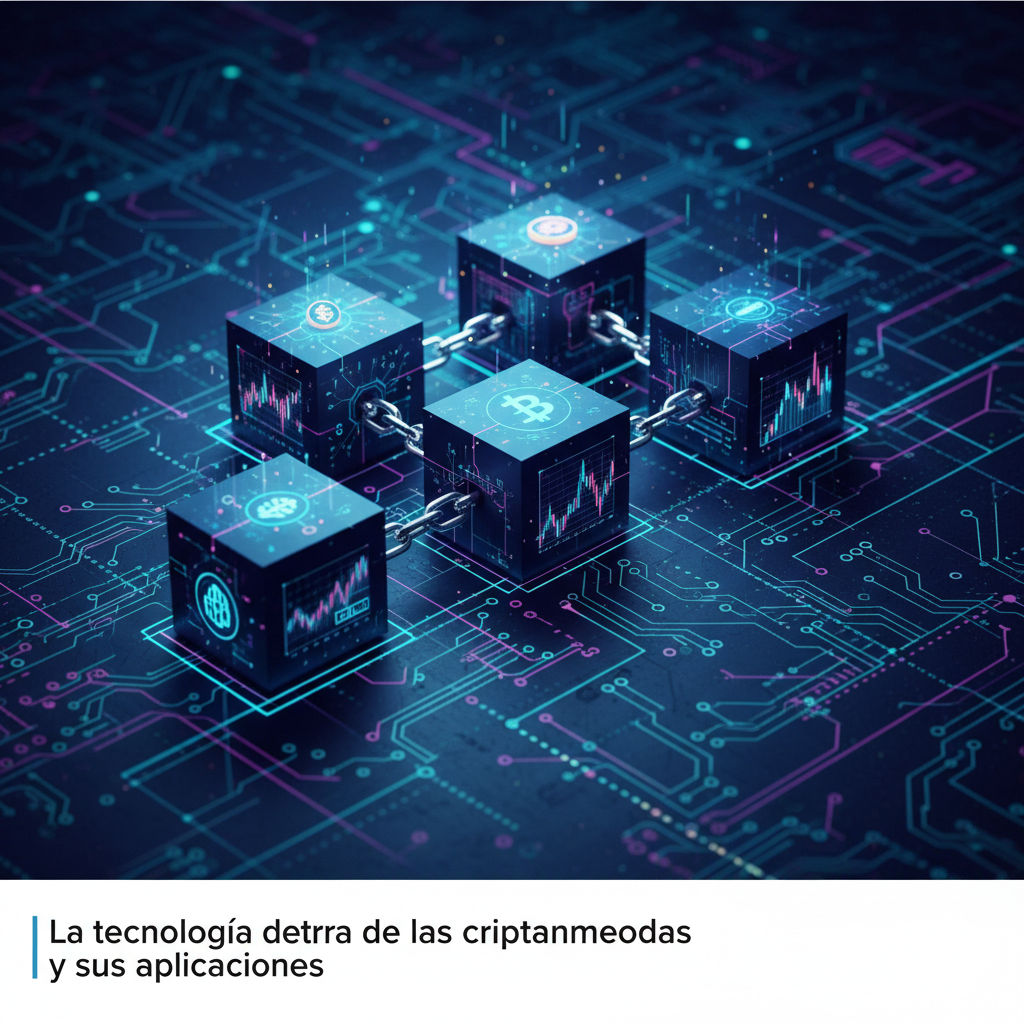
Fundamentals of blockchain technology
The blockchain technology it is a digital registration system that stands out for its nature decentralized and secure. Its design allows information to be stored transparently and permanently.
It consists of one blockchain, where each block stores a set of verified transactions and a unique code called hash. This structure connects and ensures data integrity.
Furthermore, this chain is replicated across multiple distributed nodes, ensuring the continued availability of information and making any manipulation attempts difficult.
Structure and operation of the blockchain
Each block in the chain contains transaction data, a hash own and the hash of the previous block, forming a secure and immutable sequence. This structure ensures the integrity of the records.
When a new block is added, it must be validated to maintain string coherence. Any alteration would affect the hash and destabilize the entire sequence.
Chain replication across all nodes avoids reliance on a central authority and allows information to be accessible and trusted to all participants.
Decentralization and security in the network
Blockchain operates on a network decentralized where each node has an identical copy of the chain, eliminating unique points of failure and increasing resistance to attacks.
Security is based on cryptography and consensus between nodes, preventing fraudulent transactions from being incorporated without majority approval.
Modifying a block requires altering all distributed copies simultaneously, a practically unfeasible task due to the necessary computational power, thus guaranteeing immutability.
Blockchain in cryptocurrencies
In the context of cryptocurrencies, the blockchain it acts as a public ledger that records each transaction made by users. This function is essential to maintain a financial system without intermediaries.
The ability to directly control digital assets without the need for banks offers users greater autonomy and security in their financial operations.
Additionally, the technology ensures transactions are transparent, traceable and permanent, eliminating risks of double spending and fraud.
Transaction registration and asset control
Each cryptocurrency transaction is stored in a block, which contains encrypted information and a unique identifier code, ensuring data integrity. This allows clear and secure tracking of assets.
Users have full control over their funds by possessing private keys that authorize transfers, eliminating intermediaries and increasing the privacy of their operations.
The decentralized ledger prevents tampering and ensures that all transactions remain accessible and verifiable to any network participant.
Validation and consensus mechanisms
To incorporate new blocks, the network uses consensus mechanisms they validate transactions, ensuring they are legitimate and preventing fraud.
One of the most common methods is proof of work, which requires solving complex mathematical problems to add blocks, ensuring system trust and security.
These methods distribute authority among participating nodes, strengthening decentralization and protecting the network from attacks or unauthorized changes.
Various blockchain applications
The technology blockchain it has transcended its initial use in cryptocurrencies to span multiple sectors, providing innovative and secure solutions.
Its characteristics of transparency, immutability and decentralization they allow processes to be improved in areas as varied as digital management and traceability.
Digital management and smart contracts
The digital management with blockchain you facilitate the creation and management of secure digital identities. This provides confidence in the verification of personal information.
The smart contracts they are self-executing programs that automate agreements and processes without the need for intermediaries, reducing errors and waiting times.
This automation improves efficiency in various transactions, ensuring that conditions are strictly and transparently met.
Traceability and other sectors
Blockchain allows one traceability complete in supply chains, ensuring the origin and route of products, which improves consumer confidence.
Additionally, sectors such as healthcare, electronic voting, and copyright protection benefit from this technology to increase security and reduce fraud.
Interesting fact about traceability
Leading companies have implemented blockchain to track food from the field to the consumer, ensuring the authenticity and quality of products.
This not only raises health security standards, but also strengthens accountability and transparency in global trade.
Impact and benefits of blockchain
Blockchain technology offers a significant impact on various sectors by providing a transparent and reliable system for data recording. Its adoption reduces risks associated with opaque and manipulable processes.
Additionally, blockchain brings tangible benefits such as fraud prevention and improved operational efficiency, transforming the way organizations manage critical information and conduct transactions.
These advantages drive trust between stakeholders, facilitating more secure agreements and accelerating the digitalization of business and government processes.
Transparency and fraud prevention
The transparency blockchain allows all transactions to be visible to authorized participants, making it difficult to hide information or alter records without detection.
This feature is key for the fraud prevention, since each change is immutably and traceably recorded in the chain, preventing fraudulent manipulation.
Furthermore, decentralization ensures that there is no single vulnerable point, strengthening confidence in the integrity of the system and reducing the possibility of illicit activities.
Efficiency and cost reduction
Blockchain improves the efficiency by eliminating intermediaries and automating processes through smart contracts, accelerating operations and reducing waiting times.
This automation significantly reduces the costs operational in sectors such as finance, logistics and public administration, which traditionally involve multiple manual verifications.
Furthermore, by minimizing errors and discrepancies, blockchain reduces expenses associated with audits and corrections, allowing companies to optimize their resources and improve their competitiveness.