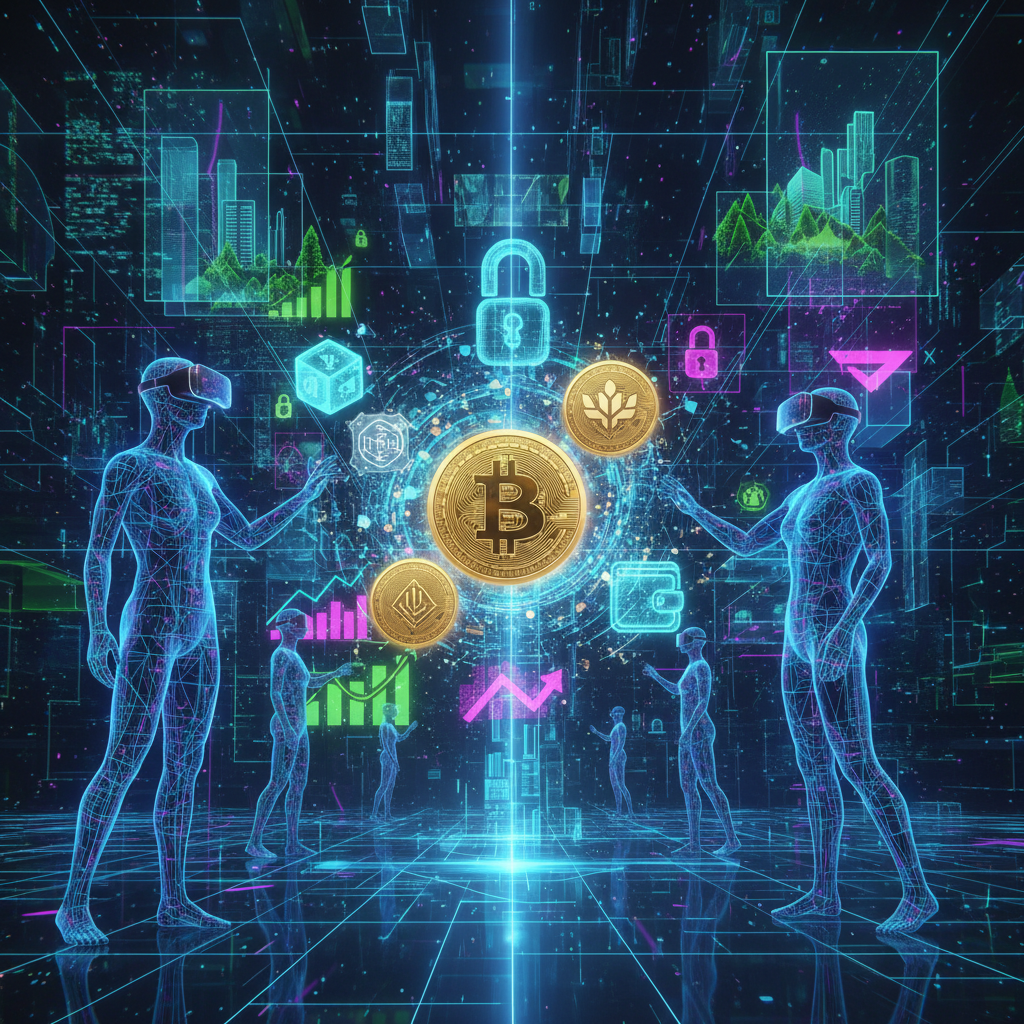
Main functions of cryptocurrencies in the metaverse
The cryptocurrencies they are essential in the metaverse, functioning as the main means of exchange for acquiring digital goods and services. Their use facilitates the creation of dynamic and autonomous virtual economies.
In addition, these digital currencies allow the storage of value and property unique assets within the metaverse, guaranteeing security and transparency in transactions thanks to blockchain technology.
Exchange medium in virtual environments
In the virtual worlds of the metaverse, cryptocurrencies act as currency to purchase land, objects and digital services, facilitating trade without intermediaries.
This medium of exchange is essential to activate the internal economies, allowing users to actively participate in the digital economy safely and quickly.
Cryptocurrency integration eliminates the need for central authorities, promoting a free and decentralized market within these virtual environments.
Storage of value and digital property
Cryptocurrencies serve to store value, making it possible for users to maintain and control their digital assets within the metaverse. These assets are usually represented by NFTs.
This digital property is transferable and blockchain-backed, ensuring authenticity and preventing fraud or unauthorized copying.
Thus, users can secure their digital assets reliably, fostering trust and investment in the virtual ecosystem.
Technology and security behind transactions
Blockchain technology is essential for cryptocurrencies in the metaverse, providing a secure and reliable basis for all digital transactions. Its decentralized design guarantees resistance to failures and manipulation.
Thanks to these innovations, users can carry out exchanges with confidence, knowing that their digital assets are protected against fraud and unauthorized access.
Blockchain as a technological base
The blockchain functions as a public, decentralized ledger where all transactions in the metaverse are recorded. This allows real-time tracery and verification.
This technology ensures that each operation is unique and immutable, avoiding duplication or fraudulent alterations. In addition, it facilitates interoperability between different metaverse platforms.
Thus, blockchain not only supports security but drives trust and mass adoption of cryptocurrencies in virtual environments.
Decentralization and transparency
Decentralization eliminates the need for intermediaries or central authorities, distributing control of transactions between multiple nodes in the network.
This structure allows any user to validate operations, promoting greater transparency and reducing the risk of censorship or data manipulation.
Additionally, the public nature of blockchain offers full visibility into transactions, strengthening confidence in the digital economy of the metaverse.
Use of digital wallets
Digital wallets are indispensable tools for securely storing, sending and receiving cryptocurrencies within the metaverse. They function as a personal key to assets.
These portfolios allow users to interact with various platforms, facilitating the management of their digital portfolio and ensuring exclusive control over their funds.
In addition, wallets integrate advanced security measures, such as encryption and multi-factor authentication, protecting users against unauthorized access.
Examples of specific cryptocurrencies on metaverse platforms
In the metaverse, some platforms have their own cryptocurrencies that boost their internal economies. These digital currencies facilitate interaction and the acquisition of virtual assets.
These tokens not only function as payment methods, but also allow users to participate in the governance and evolution of the platforms where they are used.
MANA in Decentraland
MANA is the native cryptocurrency of Decentraland, a virtual reality platform where users can buy and sell land and digital objects using this currency.
With MANA, users acquire digital plots and participate in events, thus strengthening the virtual economy and creativity within the Decentraland metaverse.
Additionally, scarcity and verifiable asset ownership ensure that MANA maintains value and relevance to its users in the long term.
AXS in Axie Infinity
AXS is Axie Infinity's own token, a blockchain-based game where players raise and fight creatures called Axies, using this cryptocurrency for various transactions.
AXS holders can participate in important decisions about game development and earn rewards for their commitment within the ecosystem.
This cryptocurrency boosts the gaming economy, making it easier to buy, sell and exchange Axies and other unique digital assets.
Economic and social impact on virtual worlds
The metaverse is transforming economic and social relations, allowing the creation of robust virtual economies where users interact and generate real value from digital assets.
These digital economies foster new ways of working, entertainment and commerce, changing the way people connect and participate in global virtual spaces.
Cryptocurrencies facilitate monetization and control of digital assets, giving users direct ownership and autonomy over their virtual assets, driving innovation and digital empowerment.
Creation of robust virtual economies
Virtual worlds use cryptocurrencies to establish internal economies where digital goods, such as land and objects, have tangible value and can be freely traded.
These economies allow users to be both consumers and creators, generating income through the purchase and sale and development of digital assets in a dynamic and decentralized environment.
Additionally, blockchain interoperability and security ensure that these economies operate transparently and reliably, attracting more participants and fostering sustained growth.
Monetization and control of digital assets
Monetization in the metaverse is based on cryptocurrencies, which allow users to sell digital experiences and assets without intermediaries, ensuring full control over their properties.
Digital assets are managed through smart contracts, which automate transactions and guarantee copyright and ownership, boosting trust in the virtual market.
This control empowers creators and consumers, who can diversify their income and actively participate in the metaverse economy, redefining traditional economic models.