Key concepts of the circular economy
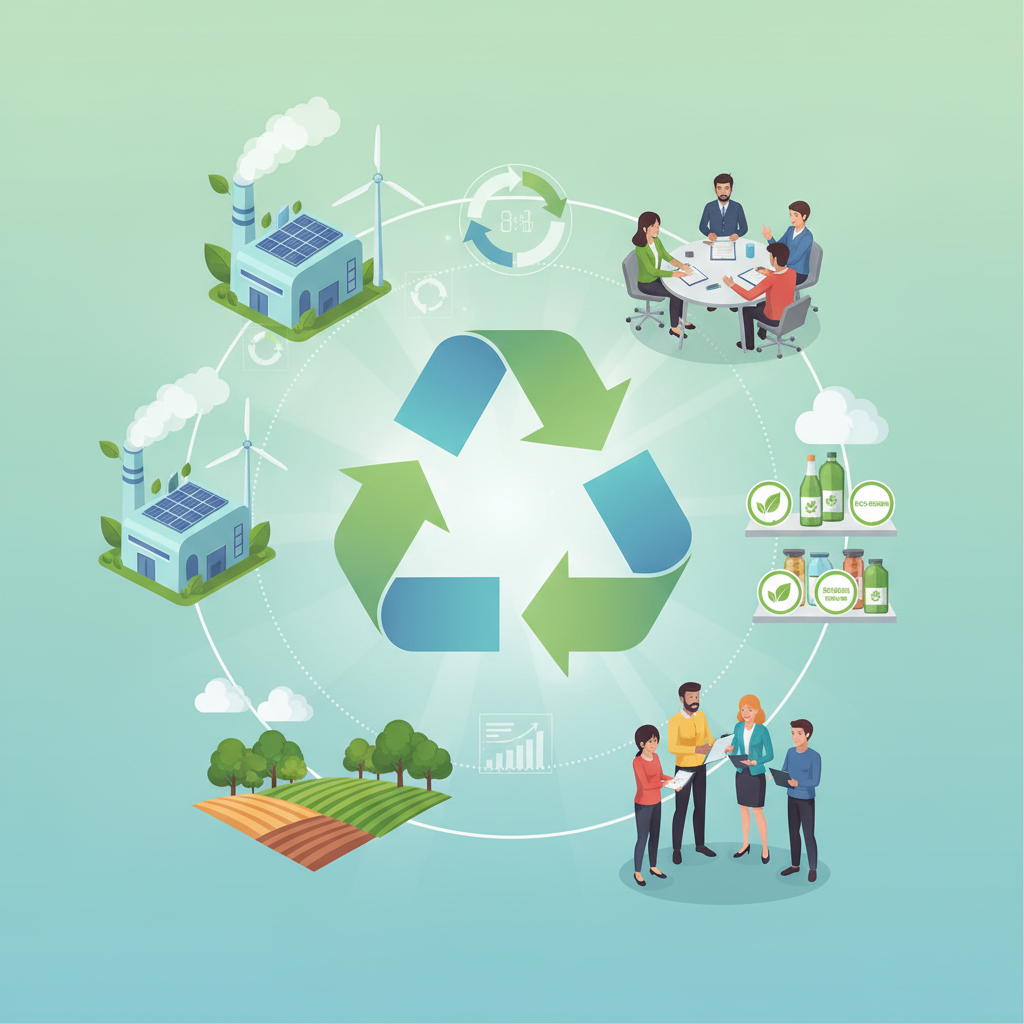
The circular economy it represents a profound change in production and consumption, seeking to overcome the traditional linear model of extracting, using and discarding.
Its main objective is to optimize the use of resources, reduce waste and maintain products and materials in the production cycle for as long as possible.
Definition and basic principles
The circular economy is based on recycling, repair, reuse and renewal of materials, promoting efficient and sustainable use of natural resources.
It involves designing products to be durable, repairable and recyclable, avoiding planned obsolescence and promoting innovation.
This approach not only has an environmental impact, but also seeks economic and social benefits by closing resource cycles.
Comparison with the traditional linear model
The linear model focuses on extract raw materials, manufacturing products, using them and then disposing of them, generating waste and waste.
In contrast, the circular economy seeks minimize the entry of raw materials and the exit of waste, promoting continuous reuse.
This change involves rethinking products, processes and customer relationships, promoting durability and efficiency within a closed system.
Economic, environmental and social impact
The circular economy generates a positive impact by optimizing resources, reducing waste and promoting practices that improve sustainability in various sectors.
This model contributes to environmental conservation and the creation of economic opportunities, favoring a more balanced relationship with the environment.
Optimization of resources and waste reduction
The circular economy seeks to maximize the use of materials, limiting the consumption of raw materials and prolonging the useful life of products and components.
This reduces waste generation and the need for final disposal, thus reducing the environmental impact and costs associated with waste management.
Repair, recycle and reuse are key strategies to maintain resources within the production cycle and achieve a more efficient economy.
Sustainable design and prevention of obsolescence
Sustainable design encourages the creation of durable, easy-to-repair and recyclable products, avoiding planned obsolescence that drives waste.
By considering the complete product cycle from its conception, innovation in materials and processes that minimize environmental impact is encouraged.
This strategy contributes to more responsible production and conscious consumption, supporting the transition towards circular systems.
Effects on the economy and society
The circular economy promotes job creation in new sectors related to recycling, repair and sustainable services.
It favors the reduction of business costs and improves competitiveness, while promoting greater social and environmental awareness among consumers.
Its adoption can contribute to mitigating climate change and preserving biodiversity, integrating social and ecological benefits for society.
Transformation in business models
The circular economy is revolutionizing traditional business models, driving companies to adopt new ways of offering value to their customers.
This change involves rethinking marketing and services, focused on sustainability and the efficiency of resource use over time.
New forms of marketing and services
Companies are migrating from selling products to offering services, such as the “product as a service” model, where you pay for use, not ownership.
This strategy encourages the manufacture of more durable, repairable and easier to update products, aligned with a sustainable circular economy.
In addition, exchange, rental and reuse platforms emerge that maximize the use of resources, minimizing the generation of waste.
Innovation in products and processes
The circular economy encourages innovation, promoting the design of products with recycled materials and processes that facilitate repair and recycling.
Companies invest in technologies that extend the useful life of goods, reduce costs and improve efficiency in resource management.
This approach requires structural changes in the supply chain and promotes a business culture oriented towards sustainability and circularity.
Challenges and benefits for companies
The adoption of the circular economy it presents important challenges for companies, including restructuring internal processes and investing in innovation.
However, it also offers numerous benefits, such as cost reduction and improved corporate image for increasingly conscious consumers.
Challenges in implementation and change of mentality
Implementing a circular model implies a profound cultural change in the company, promoting collaboration and creativity to innovate processes and products.
Staff training and adaptation in the supply chain are required to integrate reusable, recycled materials and sustainable practices.
Additionally, it is essential to transform customer relationships by building trust in services and products designed to last and be repairable.
Competitive advantages and environmental contribution
Companies that embrace the circular economy win competitive advantages by reducing costs and developing new businesses based on sustainability.
They actively contribute to environmental protection, reducing waste and the ecological footprint, which responds to the growing demand for social responsibility.
This strategy strengthens corporate reputation and positions the company as a leader in innovation and commitment to sustainable development.